
blog/
3PL basics, How 3PL Works, Outsourcing Fulfilment
Ecommerce Fulfilment Onboarding: What Happens After You Choose a 3PL?
Practical articles for online retailers who want to understand 3PL, improve fulfilment and know when it is time to hand over the work after checkout.
By
3PL Melbourne
Date
Oct 2026
Read time
5 minutes
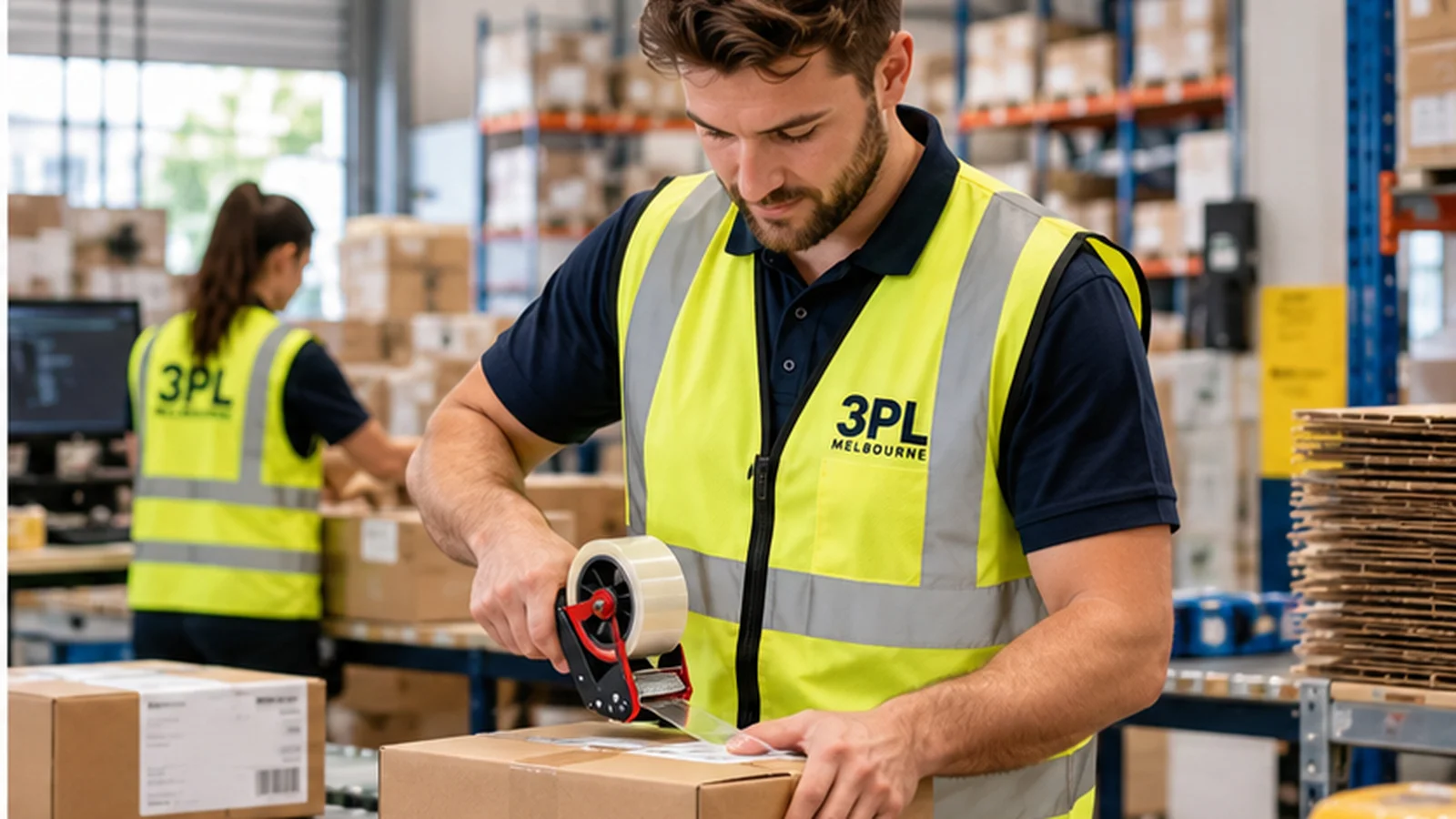
Choosing a 3PL can feel like the difficult part. For many ecommerce founders, it is actually the beginning of a completely new phase. Until now, fulfilment may have been something the business controlled directly. Stock lived in the office, spare room or existing warehouse. Team members knew where products were. Problems could be solved by walking across the room. Outsourcing changes that. Products move to another facility. Orders begin flowing through another system. Somebody else physically picks and packs each parcel. That can feel like giving up control. A good onboarding process should create the opposite feeling. It should replace informal control with better systems, clearer processes and greater visibility.
Onboarding starts with understanding how your business works
A 3PL cannot build a good fulfilment process from an order count alone. Before stock moves, the provider needs to understand the business. That includes the types of products being sold, how many SKUs exist, how orders are structured, which ecommerce platform is used and whether any products require unusual handling. Packaging is relevant too. Some businesses simply need a product placed into a standard satchel. Others require tissue, branded boxes, inserts, samples or a particular packing sequence. The aim during onboarding is to translate what the business currently does into a repeatable warehouse process.
Product information needs to become warehouse information
A founder may know every product by sight. A warehouse system does not. Products need clear identifiers. SKU information, barcodes where applicable, product descriptions, weights and dimensions all help build a reliable inventory record. Variants matter particularly in categories such as fashion, beauty and accessories. A black T-shirt in size small and the same T-shirt in size medium are two different inventory items, even though they may look almost identical. Good product data reduces ambiguity once stock begins moving at scale.
Your ecommerce store needs to talk to fulfilment
For Shopify, WooCommerce and other ecommerce platforms, the next stage is connecting the online store to the warehouse operation. The exact technical process varies. What matters is the outcome. When a customer places an eligible order, the fulfilment operation needs to receive it. When the order is dispatched, the relevant tracking information should flow back. Inventory also needs to remain appropriately synchronised. This is where onboarding becomes more than a physical warehouse exercise. The digital order journey and physical product journey need to join together.
Stock arrival deserves planning
Moving inventory into a new fulfilment centre should not be treated like dropping boxes at a storage unit. The warehouse needs to know what is arriving. Stock may need to be counted, checked, scanned and allocated to locations. If the physical quantity does not match the expected quantity, that difference needs to be identified. This first receipting process is important because it establishes the starting inventory position. If the business begins with inaccurate stock, every order after that inherits the problem.
Testing should happen before customers depend on the system
Once integrations and inventory are ready, test orders become valuable. A test order confirms that the store, warehouse and dispatch process are actually communicating as expected. More complex businesses may need to test several scenarios. For example, a multi-item order may behave differently from a single-product order. A bundle may need a different warehouse instruction. Express shipping might require a different carrier service. The purpose of testing is not to prove that the process looks correct on paper. It is to prove that the order can successfully travel from checkout to dispatch.
Go-live should feel surprisingly uneventful
There is a temptation to think of go-live as a dramatic moment. Ideally, it is not. Orders start arriving. The warehouse processes them. Tracking flows back. Customers receive parcels. That apparent simplicity is the result of the work that happened during onboarding. Good implementation moves complexity into the setup phase so it does not appear in the customer experience later.
The relationship continues after the first parcel leaves
Onboarding does not completely end on the first day. The first few weeks can reveal patterns that were difficult to anticipate beforehand. Perhaps packaging needs adjustment. Maybe one SKU requires clearer identification. An unexpected order type might appear. This is normal. The important thing is that there is a clear relationship between the ecommerce business and the 3PL so those details can be refined quickly.
Outsourcing should create headspace
For many entrepreneurs, handing over fulfilment is one of the first major operational functions they stop managing personally. That can feel strange. Then the orders keep going out. Stock remains visible. The founder suddenly has fewer parcels to think about. That is when the purpose of outsourcing becomes obvious. The goal is not simply to relocate the boxes. It is to give the business back time and capacity to grow.
Ready to move your ecommerce fulfilment to a 3PL? 3PL Melbourne can help you plan onboarding, connect your online store and transition inventory into a scalable fulfilment operation.
More fulfilment guides
Keep reading
Related articles and useful next reads for online retailers learning how fulfilment works.
3PL basics, How 3PL Works, Outsourcing Fulfilment