

blog/
Focus on growth, How 3PL Works, Scaling operations
Black Friday, Christmas and Sales Spikes: Can Your 3PL Handle Your Biggest Week of the Year?
Practical articles for online retailers who want to understand 3PL, improve fulfilment and know when it is time to hand over the work after checkout.
By
3PL Melbourne
Date
Oct 2026
Read time
5 minutes
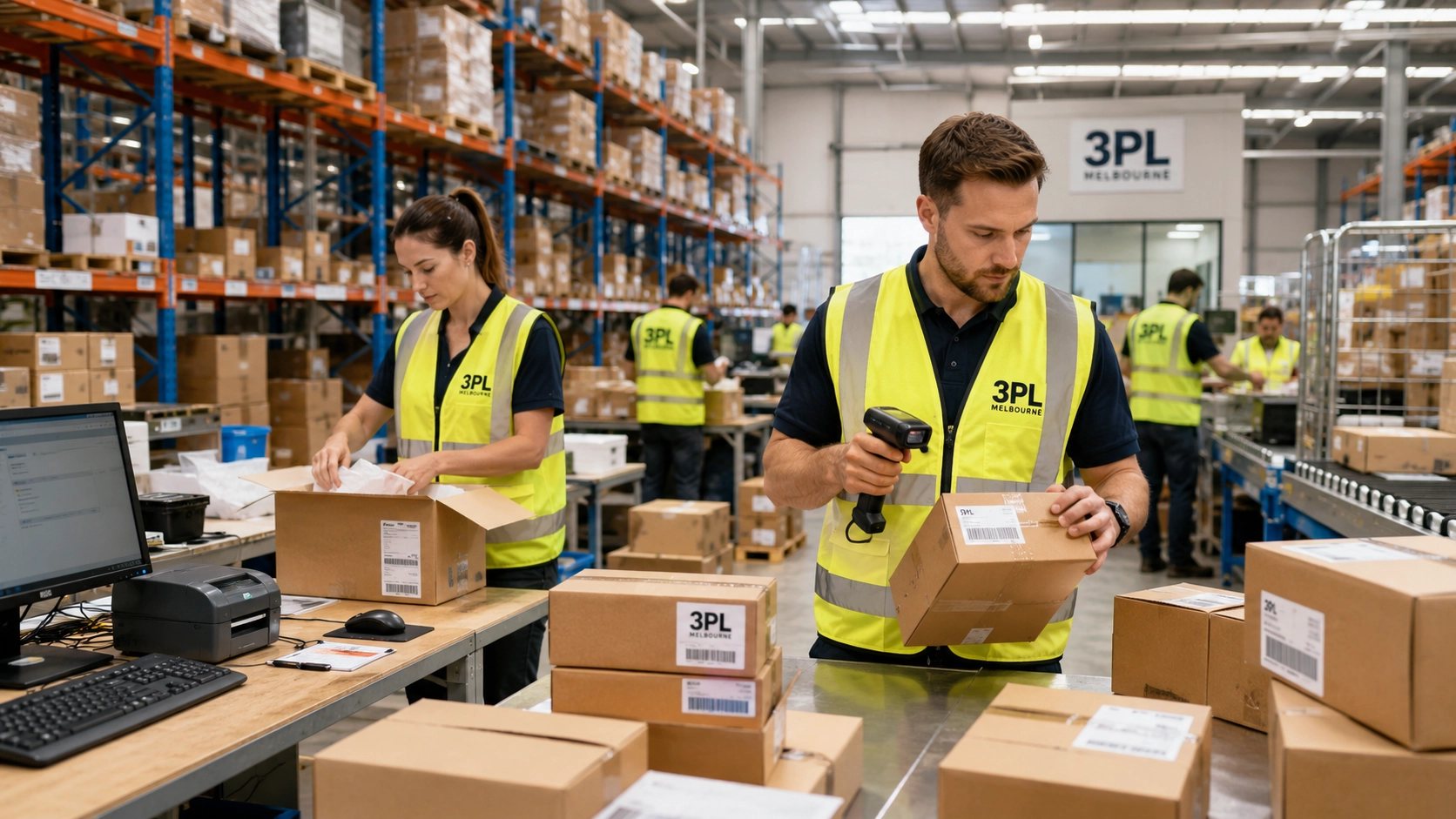
Peak trading is a good problem to have.
Until the orders start backing up.
For an eCommerce business, a successful promotion can increase demand dramatically in a very short period of time.
Black Friday and Christmas are obvious examples, but the same thing can happen after a product launch, media appearance, influencer campaign, limited release or major advertising push.
Marketing creates the demand.
Logistics has to absorb it.
And that is where a fulfilment operation that works perfectly well during an average week can suddenly start to struggle.
Preparing for peak is not simply a matter of putting more people in the warehouse.
It begins much earlier.
Peak fulfilment starts with forecasting
Nobody can predict order volumes perfectly.
That does not mean businesses should enter a major promotion without a forecast.
Share expected volumes with your 3PL as early as possible.
Consider:
- Previous sales periods
- Planned marketing spend
- Promotional discounts
- Product launches
- Email campaigns
- Influencer activity
- Expected bestselling SKUs
- Sale start and finish dates
It is often useful to develop more than one scenario.
What happens if demand is approximately what you expect?
What if it is 50% higher?
What if one product unexpectedly represents the majority of orders?
A fulfilment partner does not need perfect foresight.
It does need enough information to plan.
Make sure inventory arrives before the orders do
This sounds obvious, but peak fulfilment can fail before the sale has even started.
Having stock physically delivered to a warehouse does not necessarily mean it is immediately available for picking.
Goods need to be received, checked, recorded and placed into appropriate inventory locations.
Sending a large inbound shipment immediately before a major promotion gives the warehouse very little room to deal with discrepancies or delays.
Where possible, agree inbound deadlines with your 3PL well ahead of a major event.
That gives everyone time to confirm stock is received accurately and ready to sell.
Know which products are likely to move
Not all inventory behaves the same way during a sale.
A retailer may hold hundreds of SKUs, but a small number could generate most of the orders during a promotion.
Knowing that in advance can help the fulfilment operation prepare.
Fast-moving products may need appropriate picking locations or additional replenishment.
Promotional bundles may be able to be assembled ahead of time.
Campaign inserts and packaging can be positioned where they will be needed.
Small operational decisions made before launch can save thousands of repeated movements once order volumes increase.
Promotions need warehouse instructions too
Your marketing team may know the campaign inside out.
Does the warehouse?
Consider an offer such as:
Buy two products and receive a free gift while stocks last.
That creates several operational questions.
Which product qualifies as the gift?
How does the warehouse identify eligible orders?
What happens when the gift inventory runs out?
Can customers purchase that product separately?
Does the promotion require different packaging?
The website and marketing campaign may make the offer look effortless.
Behind the scenes, the fulfilment rules need to be equally clear.
Packaging becomes a capacity issue
During normal trading, running low on a particular carton might be a minor inconvenience.
During peak, it can stop orders moving.
Businesses should forecast packaging requirements alongside stock requirements.
That includes:
- Cartons
- Satchels
- Labels
- Protective materials
- Branded packaging
- Inserts
- Promotional collateral
- Tape and consumables
Special packaging also needs to be considered.
If a Christmas campaign requires a different presentation or a sale includes additional collateral, those materials should ideally reach the fulfilment operation before demand accelerates.
Ask how capacity actually scales
When selecting or reviewing a 3PL, “we can scale” is not a particularly useful answer by itself.
Ask what scaling means operationally.
How does the warehouse prepare for known volume increases?
How are labour requirements planned?
How are picking and packing areas adjusted?
How does the operation deal with a sudden increase concentrated around particular SKUs?
How are priorities communicated if several clients experience peak demand simultaneously?
The goal is not to interrogate your logistics provider.
It is to understand whether scalability is part of an operating model or simply an aspiration.
Agree dispatch expectations before the campaign
One of the easiest ways for retailers and fulfilment providers to frustrate one another during peak is to enter the period with different assumptions.
If a normal dispatch expectation is based on regular daily volumes, clarify what applies during a major event.
Will order cut-off times change?
Are weekend operations required?
Are any carrier collection schedules different?
What happens if demand exceeds the forecast?
When will the retailer be told?
Clear expectations are particularly important because customers may already be more sensitive to delivery timing around Christmas or promotional events.
Your carrier is part of peak planning too
A parcel is not delivered when it leaves the packing bench.
Peak volume affects freight networks as well as warehouses.
Retailers need to understand relevant carrier cut-offs, collection arrangements and likely delivery expectations.
Christmas is the obvious example.
Promising delivery dates that the logistics network cannot realistically support creates a customer service problem regardless of how quickly the warehouse dispatched the parcel.
Your website, marketing, fulfilment operation and delivery promises need to tell the same story.
Visibility matters more when things get busy
During a quiet week, a small inventory discrepancy may be relatively easy to investigate.
At peak volume, uncertainty becomes much more expensive.
Retailers need good visibility of stock and order activity so they can make decisions quickly.
If a key product is running low, marketing may need to respond.
If order demand is substantially above forecast, customer communications may need to change.
If inbound inventory is delayed, the business needs to know before selling against it.
This is where disciplined inventory management and reporting become commercially valuable rather than simply administrative.
Plan for returns before peak starts
A large increase in sales is often followed by a large increase in returns.
This is particularly relevant after Christmas and major promotional periods.
Returned products take warehouse capacity too.
They need to be received, identified, inspected and reconciled according to the agreed process.
If suitable goods can be returned to saleable inventory, doing so efficiently can also matter commercially.
Peak planning should therefore continue beyond the final dispatch date.
What happens when the forecast is wrong?
It probably will be.
The purpose of forecasting is not to predict every order accurately.
It is to give your business and 3PL a framework for responding.
If actual demand is much higher than expected, communication becomes critical.
A good working relationship allows both parties to make decisions quickly about priorities, capacity and customer expectations.
Peak periods tend to expose the quality of a logistics relationship because there is less room for ambiguity.
Your biggest sales day should not become your biggest operational problem
Retailers invest heavily in generating demand.
Advertising, content, email, promotions and product launches are all designed to create more orders.
Fulfilment needs to be included in that planning.
The objective is not simply to survive Black Friday or Christmas.
It is to build a logistics operation capable of responding when the business succeeds.
Because if a campaign produces twice as many orders as expected, the ideal response from your warehouse is not panic.
It is: we’re ready.
Planning a major promotion or preparing for seasonal demand? Talk to 3PL Melbourne early so inventory, fulfilment, packaging and dispatch requirements can be planned before the orders arrive.
More fulfilment guides
Keep reading
Related articles and useful next reads for online retailers learning how fulfilment works.
3PL basics, How 3PL Works, Outsourcing Fulfilment