
blog/
Customer experience
Four Elements of a Better Unboxing Experience
Practical articles for online retailers who want to understand 3PL, improve fulfilment and know when it is time to hand over the work after checkout.
By
3PL Melbourne
Date
Aug 2026
Read time
5 minutes
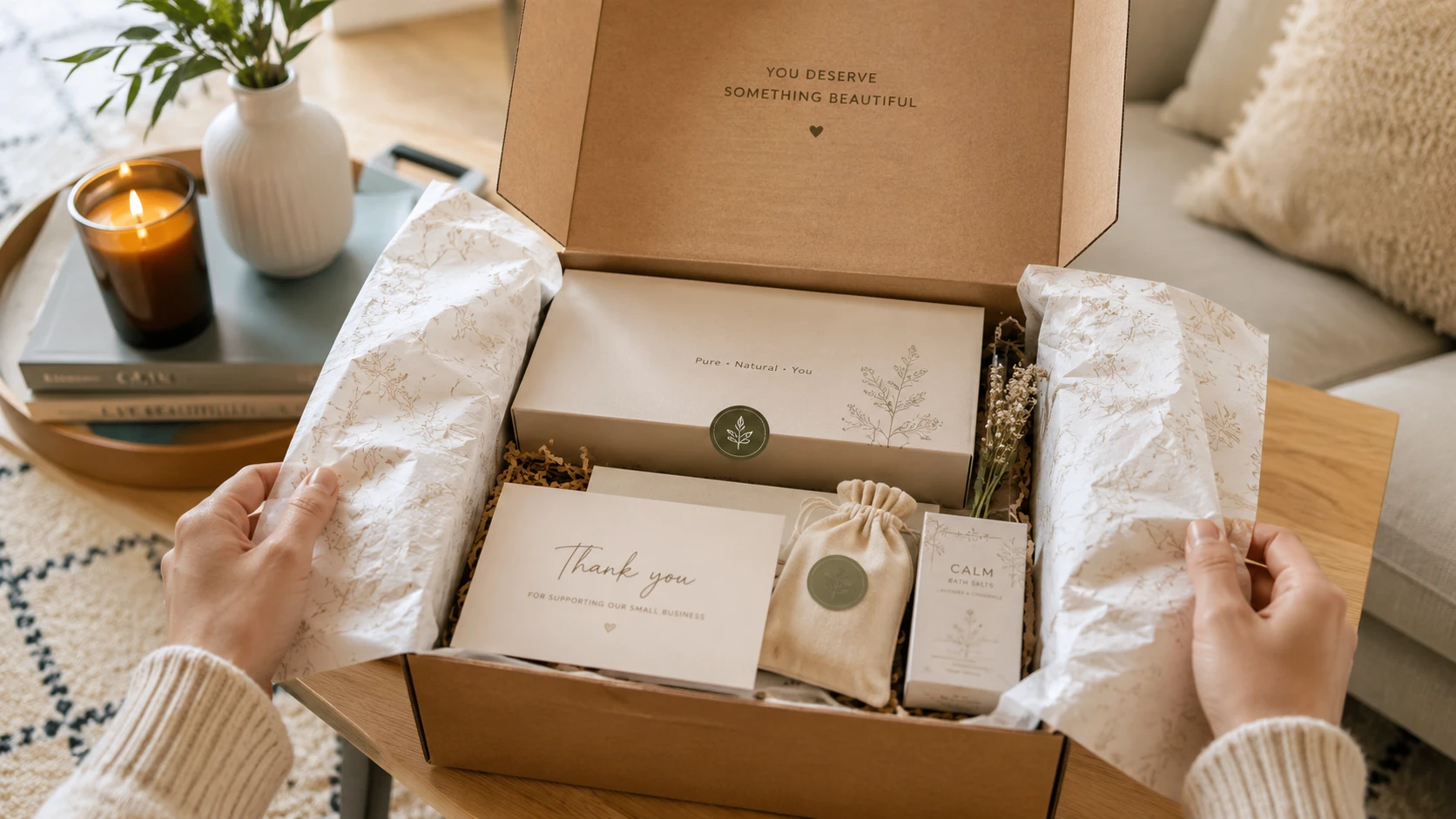
For an eCommerce business, packaging has two important jobs.
First, it must protect the product throughout storage, handling and delivery. Second, it should present the product in a way that reflects the quality, personality and values of the brand.
The functional side of packaging is essential. Products need to arrive safely, securely and in the condition the customer expects. However, packaging is also one of the few physical brand touchpoints available to an online retailer.
A customer may have discovered your business through an advertisement, browsed your website and received several transactional emails before placing an order. But the parcel arriving at their home is often the first time they physically interact with your brand.
That makes the unboxing experience an important part of the overall customer journey.
Why the unboxing experience matters
Customers do not experience packaging as a separate logistics function. They experience it as part of the product they purchased and the brand they chose to trust.
When an order is carefully packed, appropriately presented and easy to open, it reinforces the impression that the business is professional and attentive.
When a parcel arrives damaged, excessively packed, difficult to open or poorly presented, it can create doubt before the customer has even used the product.
A strong unboxing experience can help a business:
- create a positive first impression;
- reinforce its brand identity;
- demonstrate care and attention to detail;
- protect products from damage;
- encourage repeat purchases;
- support customer reviews and recommendations;
- introduce customers to other products;
- create shareable moments for social media.
This does not mean every order needs elaborate packaging. Effective packaging should be appropriate to the product, the customer, the brand and the available budget.
The aim is to create a consistent experience that feels considered rather than unnecessarily complicated.
Here are four elements to consider.
1. Choose packaging that balances protection and presentation
The first priority is ensuring the product reaches the customer safely.
The packaging should be strong enough to protect the contents during warehousing, picking, packing, sorting, transport and final delivery. Fragile, heavy, liquid, perishable or unusually shaped products may require additional protection or specific handling processes.
At the same time, packaging should not be much larger or more complex than necessary.
Oversized packaging can increase material use, freight costs and the risk of products moving around during transit. Excessive void fill may frustrate customers and create the impression that the business has not considered its environmental impact.
The right packaging solution may include:
- appropriately sized cartons or satchels;
- internal dividers;
- tissue paper or protective wrapping;
- cushioning or void fill;
- tamper-evident seals;
- moisture protection;
- insulated materials;
- branded tape, labels or stickers;
- reusable or resealable packaging.
Branding does not need to begin with a fully customised box.
For a growing business, a standard carton with a branded sticker, printed tape or well-designed insert may be enough to create a more distinctive experience. As order volumes increase, custom cartons, printed satchels, tissue paper or internal packaging may become more commercially practical.
What matters is that the presentation feels intentional and consistent with the brand.
A premium product should not arrive in packaging that feels careless. A practical, environmentally focused brand may benefit from simpler packaging, minimal material use and clear recycling information. A playful consumer brand may use colour, copy or illustrations to create more personality.
The packaging should support the brand rather than compete with the product.
2. Add useful and relevant elements inside the parcel
A well-chosen inclusion can make an order feel more personal and provide additional value.
These inclusions do not need to be expensive. The most effective additions are usually relevant to the product, helpful to the customer or connected to a clear marketing objective.
Options may include:
- a thank-you card;
- product care instructions;
- assembly or usage information;
- a recipe or styling guide;
- a sample of a related product;
- a catalogue or product card;
- a loyalty offer;
- a referral incentive;
- a discount on a future purchase;
- return instructions;
- information about the brand or product origin;
- a request for a review;
- a QR code linking to useful content.
The objective should not be to fill the package with promotional material. Too many inserts can create clutter, increase packing time and add unnecessary waste.
Each inclusion should have a purpose.
For example, product care instructions may help the customer use the item correctly and reduce avoidable returns. A sample may introduce the customer to another product range. A loyalty offer may encourage a second purchase. A QR code may connect the physical delivery to online tutorials, recipes, product information or customer support.
Businesses should also consider whether an inclusion is suitable for every order.
Different customers may require different inserts based on:
- the product purchased;
- the value of the order;
- whether the customer is new or returning;
- the sales channel;
- the campaign;
- the delivery location;
- the time of year;
- available sample stock.
This is where fulfilment planning becomes important.
The warehouse team must know exactly which insert belongs in which order. Campaign start and end dates need to be clear. Old offers must be removed, sample inventory must be tracked and packing instructions need to be simple enough to follow consistently.
A good marketing idea only improves the customer experience when it is executed correctly.
3. Make the experience recognisable and repeatable
Creative packaging ideas are valuable, but consistency is what turns them into a dependable brand experience.
A customer should not receive a beautifully presented order one month and a poorly packed parcel the next. The experience should remain consistent across different products, warehouse teams, order volumes and seasonal peaks.
This requires documented packing processes.
Clear instructions may cover:
- which packaging format to use for each product;
- how products should be arranged;
- where branded materials should be placed;
- which inserts belong in specific orders;
- how fragile items should be protected;
- how multi-item orders should be packed;
- whether invoices or pricing should be included;
- how gift orders should be handled;
- how packaging changes during campaigns;
- what quality checks are required before dispatch.
Images can be particularly useful when presentation is important. A packing guide showing the correct placement of products, tissue, labels and inserts can help warehouse teams reproduce the intended result accurately.
Businesses should also think carefully about seasonal packaging.
Christmas, gifting periods, product launches and promotional campaigns can provide opportunities to vary the presentation. However, seasonal packaging should be planned early and managed carefully.
Considerations include:
- how much packaging stock to order;
- where it will be stored;
- when it should begin and end;
- what happens to unused materials;
- whether the design is reusable in future;
- whether additional packing steps will affect dispatch times.
A 3PL provider can help assess whether a packaging concept is operationally practical before the business commits to large quantities of materials.
This can prevent unnecessary costs and reduce the risk of a creative idea causing delays or packing errors.
4. Test packaging before using it at scale
Packaging may look effective in a design presentation but perform differently during actual transport.
Before introducing a new packaging format, businesses should test it using the real product, packing materials and likely delivery conditions.
Testing may consider:
- drops and impacts;
- vibration and movement;
- stacking pressure;
- moisture exposure;
- temperature changes;
- tampering;
- seal strength;
- product movement inside the package;
- damage to corners and edges;
- label adhesion and barcode readability.
The testing method should reflect the product and the risks involved.
A lightweight apparel item will have different requirements from glassware, electronics, cosmetics, liquids or heavy components. Products travelling long distances or moving through several delivery networks may also require more protection.
Businesses should pack the product exactly as it will be dispatched and examine both the outer packaging and the item inside after testing.
Questions to consider include:
- Did the product move during the test?
- Was any part of the item scratched, crushed or broken?
- Did the carton or satchel remain securely closed?
- Did the packaging still look presentable?
- Could the customer open it without damaging the product?
- Was any protective material unnecessary?
- Would a smaller or stronger package perform better?
- Were labels and barcodes still readable?
Testing should also continue after launch.
Customer complaints, returns, damaged goods and courier feedback can reveal packaging weaknesses that were not identified during initial trials.
If the same type of damage occurs repeatedly, the answer may not be to add more packaging. The carton size, internal layout, product placement, material strength or carrier method may need to change.
Sustainability is now part of the experience
Customers are increasingly aware of how much packaging arrives with an online order.
While product protection must remain the priority, businesses should avoid unnecessary materials wherever practical.
A more considered packaging approach may include:
- reducing oversized cartons;
- minimising void fill;
- using recyclable materials;
- removing unnecessary plastic;
- selecting packaging made with recycled content;
- providing clear recycling instructions;
- using one packaging format for several suitable products;
- choosing materials that are easy for customers to separate and dispose of.
Sustainable packaging claims should be clear and accurate. Terms such as recyclable, compostable and biodegradable can mean different things depending on the material and the disposal facilities available to the customer.
Packaging should therefore be assessed on its complete purpose, not only how it looks or how it is described.
A package that uses less material but fails to protect the product may result in replacement freight, additional packaging and greater waste. The strongest solution balances protection, presentation, cost and environmental responsibility.
The role of your 3PL provider
Packaging decisions affect more than the appearance of a parcel.
They influence warehouse storage, packing time, freight costs, inventory management, quality control and the ability to dispatch orders efficiently.
An experienced 3PL provider can help a business consider:
- suitable packaging formats;
- storage space required for packaging materials;
- packing time and labour requirements;
- kitting and insert management;
- branded packaging processes;
- product protection;
- order accuracy;
- freight efficiency;
- packaging stock levels;
- seasonal campaign requirements;
- returns and damage patterns.
The provider should also be able to translate the brand’s packaging concept into clear, repeatable warehouse instructions.
This is particularly important as order volumes grow. What works when a business packs 20 orders internally may not remain practical when a warehouse is processing hundreds or thousands.
The goal is to preserve the intended customer experience without creating unnecessary complexity or slowing fulfilment.
Make every delivery part of the brand experience
The unboxing experience begins well before the customer opens the parcel.
It starts with choosing the right packaging, protecting the product, defining how the order should be presented and creating processes that can be followed consistently.
Effective packaging does not need to be extravagant. It needs to be functional, relevant and aligned with the brand.
When handled well, packaging can make customers feel confident about their purchase, encourage them to buy again and reinforce the care behind the business.
The experienced team at 3PL Melbourne can help you develop practical, cost-effective packaging and fulfilment solutions that protect your products and support a better customer experience.
Call 1300 337 100 to discuss your eCommerce packaging and fulfilment requirements.
More fulfilment guides
Keep reading
Related articles and useful next reads for online retailers learning how fulfilment works.
3PL basics, How 3PL Works, Outsourcing Fulfilment